Configuración
 Entrega rápida
 Tipos de pago


 Producto del mercado

Magnetic sensing in harsh thermal environments with Allegro Microsystems APS11203/APS12203 Hall Effect ICs
2026-04-17
Magnetic position-sensing applications all rely on one key requirement: the sensor must trip at the same magnetic flux density whether the surrounding temperature is -40°C or above 100°C. Meeting this requirement can prove to be difficult. The silicon die inside a Hall-effect IC generates a small but persistent offset voltage that drifts as the package heats up, mechanical stress from overmolding shifts the Hall plate response, and the gain of the internal amplifier tracks its own temperature curve. When all three of these drift sources combine, the magnetic operating point of a standard Hall switch or latch can shift by some millitesla, and that shift is often large enough to cause missed detections or false triggers in safety-critical systems.
Allegro Microsystems solves this issue across successive generations of chopper-stabilized position sensors. The new additions to the portfolio, the APS11203 switch and APS12203 latch, improve the thermal stability, voltage headroom, and design flexibility over earlier models.
Switches and latches serve different functions
Before looking at the devices in detail, it is worth clarifying the functional difference between Hall-effect switches and latches. Hall-effect switches like Allegro’s APS11203 activate the output when the applied magnetic field rises above a defined operating point and deactivate when the field drops below a lower release point; remove the magnet entirely and the output returns to an inactive state. This behavior is suitable for applications where the presence or absence of a single magnetic pole needs to be detected, e.g., confirming that a seatbelt buckle is latched or a protective cover on an industrial machine has been closed.
 Figure 1: The SOT-23-3 packaging of Allegro’s APS11203 and APS12203. (Image source: Allegro Microsystems)
Hall-effect latches like Allegro’s APS12203 operate differently: a south-polarity field strong enough to exceed the operating threshold pulls the output low, and it remains low even after the south pole is removed. Releasing the output requires the deliberate application of a north-polarity field that exceeds the release threshold. This bi-stable behavior is why latches are a favored choice for reading alternating-pole ring magnets in brushless DC motor commutation and rotary encoder wheels, where a repeating north-south pattern carries speed, direction, or absolute angular position data.
Cancelling offset where it originates with chopper stabilization
Both the APS11203 and APS12203 integrate Allegro’s proprietary chopper-stabilization circuit, a technique the company has refined over three generations of Hall-effect IC design. The basic principle is signal modulation at a high internal clock frequency where a Hall plate is electrically rotated through multiple orientations during each measurement cycle so the desired magnetic signal appears at a consistent frequency, while the unwanted DC offset voltage, which is fixed relative to the physical die, is pushed up to a higher frequency band.
A low-pass filter then strips out the offset and passes the clean magnetic signal. For the engineer, the result is that the magnetic switch points of these devices hold steady across the full junction temperature range because the primary sources of switch-point drift have been internally removed. This internal correction also makes the devices less sensitive to any mechanical stresses introduced during reflow soldering and PCB assembly.
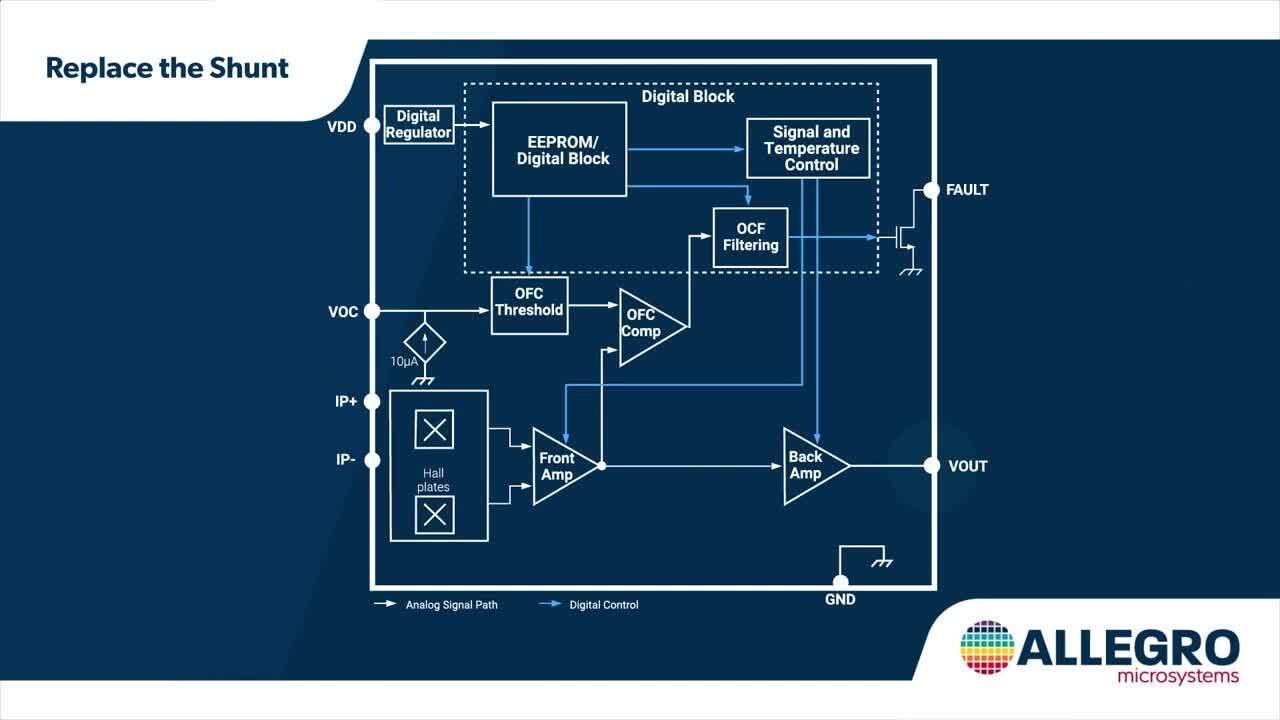
 Figure 2: A functional block diagram of Allegro’s APS11203. (Image source: Allegro Microsystems)
Electrical and magnetic specifications for 24 V architectures
The APS11203 and APS12203 operate from a supply voltage of 2.7 to 26 V, which means a single part number covers both 3.3 V logic-level rails and the 12 V or 24 V bus voltages found in automotive body electronics, industrial control panels, and building automation systems. The output stage is an open-drain configuration that sources current via an external pull-up resistor, allowing direct connection to microcontroller GPIO inputs and PLC discrete input cards without additional level-shifting components. Both devices carry the full AEC-Q100 qualification and support junction temperatures up to +165°C, making them suitable for under-hood locations like throttle and valve position sensing and gear-shift selector detection.
The APS11203 switch family offers multiple ordering variants including unipolar and omnipolar magnetic response modes. The unipolar versions respond to one polarity, with south-sensing and north-sensing options available, although south-sensing is the usual choice when a single bar or disc magnet provides the trigger field. On the other hand, omnipolar versions respond to either magnetic polarity. Within each mode, high-sensitivity and low-sensitivity switch-point grades are available, allowing designers to trade off air-gap distance against noise immunity. Output polarity options also allow engineers to match the active-low or active-high convention of the target system without the need for an external inverter. APS12203 latches also provide the same configurability, with multiple switch-point grades and output polarity options designed for bipolar sensing of alternating-pole magnet arrays.
 Figure 3: A typical application circuit for Allegro’s APS12203. (Image source: Allegro Microsystems)
EMC and ESD protection in demanding applications
Deploying a Hall-effect sensor next to motor windings, relay coils, or high-current switching circuits exposes every pin to conducted and radiated interference that can corrupt the magnetic measurement or, in the worst case, damage the silicon. The APS11203 and APS12203 address this with built-in protection features like output short-circuit current limiting on both devices, while the APS12203 additionally offers reverse-voltage and overvoltage protection. Both devices can tolerate reverse supply voltages up to -18 V and an absolute maximum supply voltage of 28 V.
For applications that require stricter system-level EMC qualifications, such as powered ESD testing to ISO 10605, conducted immunity testing per ISO 7637-2 and ISO 16750-2, and bulk current injection testing per ISO 11452-4, designers can supplement the basic application circuit with additional passive filtering on the output. Moreover, since the chopper-stabilization circuit already rejects low-frequency noise and DC offset, the external filtering only needs to attenuate the high-frequency transients that fall outside the chopper's cancellation bandwidth, keeping the additional component count minimal.
Package options and key applications
Both the APS11203 and APS12203 are available in the SOT-23-3 surface-mount package, a three-pin form factor that takes up minimal board space and works with standard pick-and-place equipment and reflow profiles. The packaging is Pb-free and RoHS-compliant. From a BOM perspective, the on-chip voltage regulator, short-circuit-protected output, and solid-state reliability of these ICs keep the external component count to a supply-bypass capacitor and a pull-up resistor, making the total solution cost competitive vs. older, less-stable alternatives.
Combining high-voltage operation, AEC-Q100 qualification, and thermally stable switch points, the APS11203 and APS12203 are suitable for a wide range of applications. In automotive body electronics, these devices can detect seatbelt buckle engagement, door and trunk ajar status, steering lock position, and wiper home position. Industrial usage includes end-of-travel detection on linear actuators, cover-open safety interlocks on machinery, proximity sensing for building automation equipment, and encoder feedback on brushless motors driving conveyor lines. They are also applicable in consumer applications, such as lid-close detection in laptops and appliances to motor commutation in cordless power tools and HVAC blower fans.
Visit the APS11203/APS12203 product page to identify the device that best suits your system requirements.
Descargo de responsabilidad: Las opiniones, creencias y puntos de vista expresados por los autores o participantes del foro de este sitio web no reflejan necesariamente las opiniones, las creencias y los puntos de vista de DigiKey o de las políticas oficiales de DigiKey.