Settings
 Fast Delivery
 Payment Types


 Marketplace Product

Articles and blogs
 Webinar – Simplify CRA Compliance for Your Existing MCU-Based Designs
Discuss how organizations can leverage documentation, risk assessments, and security enhancements to reduce risk and examine meaningful security updates.
 How Hardware Gets Hacked (Part 7): Freshness and Randomness
Learn how challenge-response authentication, nonces, and cryptographic MACs help embedded systems defend against replay attacks.
 How Hardware Gets Hacked (Part 6)
Learn how rolling counters and cryptographic MACs prevent replay attacks, authenticate devices, and strengthen embedded security.
 How Hardware Gets Hacked (Part 5)
Learn how replay attacks exploit repeated unlock messages, why authenticity matters, and how embedded systems can defend against them.
 How Hardware Gets Hacked (Part 4): Memory Protections
Understand how memory read attacks work on MCUs and how to defend using debug disable, encryption, and hardware protection features.
 Common Website Vulnerabilities and How to Fix Them
Web development opens the door to creating awesome tools, websites, and personal projects! However, it can be a bit overwhelming trying to figure out how to keep your site secure while building it.
 What Is Cybersecurity and Why Is It Important?
Small steps can help reduce the risk of cyber-attacks on peripheral devices which typically use default passwords or outdated software.
 How Hardware Gets Hacked (Part 3): Adopting the Attacker Mindset
Explore how attackers gather device info, map inputs, and uncover vulnerabilities using reconnaissance in embedded hardware security.
 How to Establish a Secure Hardware Foundation for Long-Term CRA Compliance
Publish Date: 2026-04-08
How to Establish a Secure Hardware Foundation for Long-Term CRA Compliance
Publish Date: 2026-04-08
Learn how to use the NXP EdgeLock secure enclave to establish a secure hardware foundation for long-term CRA compliance.
 How Hardware Gets Hacked (Part 2): On-boarding
Explore a hardware security workflow using firmware builds, simulation tools, serial commands, and automated tests for microcontroller systems.
 Webinar - Why Cybersecurity Belongs in Safety Conversations
Safety components that once operated in isolation now communicate across networks bringing tremendous value, but it also creating risk.
 Meeting Cyber Resilience Act Requirements with Hardware Root of Trust
The European Cyber Resilience Act (CRA) aims to improve the security of products with digital components with mandatory cybersecurity requirements.
 Choosing the Right Memory Architecture for Firmware Security
Firmware security has always been an afterthought. Therefore, the choice of memory architecture is a key decision in establishing a verifiable chain of trust.
 How Hardware Gets Hacked (Part 1)
Learn how embedded systems face physical attacks, key fob risks, competition challenges, and common weaknesses in hardware security.
 Accelerate Advanced IoT Deployment with Multiprotocol Wireless MCU Modules
Publish Date: 2025-12-12
Accelerate Advanced IoT Deployment with Multiprotocol Wireless MCU Modules
Publish Date: 2025-12-12
Learn how multiradio wireless MCU modules accelerate the design, certification, and deployment of advanced multiprotocol IoT devices.
 Current Security Challenges in Semiconductor Manufacturing and Effective Countermeasures
Publish Date: 2025-11-13
Current Security Challenges in Semiconductor Manufacturing and Effective Countermeasures
Publish Date: 2025-11-13
Many semiconductor production environments rely on standalone software security systems resulting in a malware risk via USB flash drives or maintenance PCs.
 Use Optimized IR Emitters to Minimize Performance Tradeoffs
Advanced IR emitters offer high performance and consistent operation, with a broad range of devices to best meet application priorities.
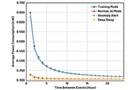 Apply an Edge AI Drop-In Solution to Enhance Wireless Condition-Based Monitoring
Publish Date: 2025-09-30
Apply an Edge AI Drop-In Solution to Enhance Wireless Condition-Based Monitoring
Publish Date: 2025-09-30
A drop-in solution with edge AI enables immediate deployment of wireless condition-based monitoring with real-time notification of vibration anomalies.
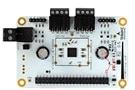 Use Advanced Analog Front-Ends and Security to Bring Benefits of AI to Medical Point of Care
Publish Date: 2025-09-24
Use Advanced Analog Front-Ends and Security to Bring Benefits of AI to Medical Point of Care
Publish Date: 2025-09-24
The accelerating trend towards point-of-care medical tests and assessments requires sophisticated, application-focused analog front-end and data security ICs.
 iWave Telematics Solutions Aligned with International & EU Cybersecurity Standards
With the rapid expansion of connected automotive and telematics systems, cybersecurity has become non-negotiable - telematics devices must be secure by design.