Settings
 Fast Delivery
 Payment Types


 Marketplace Product

Cutting Cable Ties Without Cutting Corners: HellermannTyton’s EVO Cut Hand Tool
2026-06-04
If you have ever had to remove a cable tie from a dense wiring harness, you know the moment of hesitation that comes with reaching for a pair of side cutters. Slip by a millimeter and you risk nicking the insulation of the very wires you were trying to bundle, and, in some applications, that small mistake can translate into hours of rework or a costly field callback. HellermannTyton has designed its EVO Cut hand tool to take that risk off the table entirely, giving you a purpose-built way to remove cable ties quickly and safely.
A safer alternative to general-purpose cutters
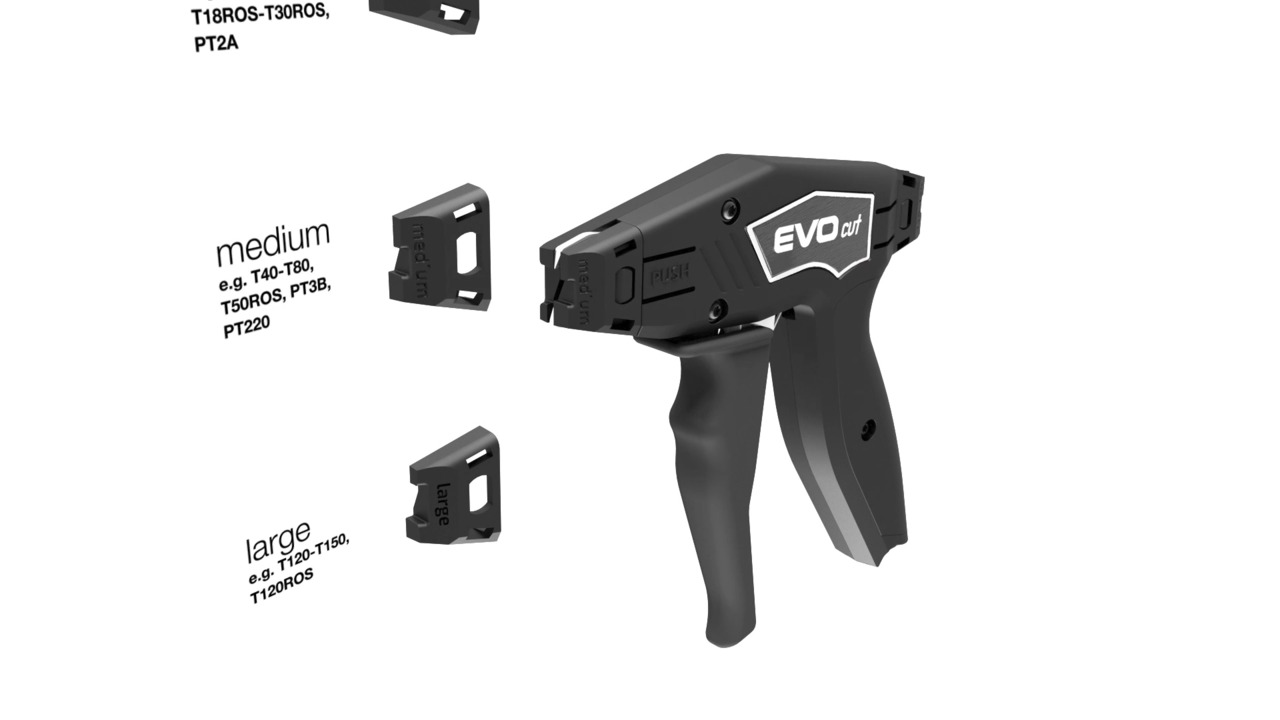
The EVO Cut (part number 110-05105) (Figure 1) is a manual cutting tool developed by HellermannTyton for the specific job of removing plastic cable ties from various bundling applications. Unlike a standard pair of wire cutters, which rely on your judgment to position the blade away from the underlying wires, the EVO Cut uses a notched nosepiece that centers the tool directly on the cable tie strap or the tie head. This notch ensures that only the cable tie is cut, not the cables it was holding together. This design turns a task that used to require careful aim and a steady hand into a simple, repeatable operation.
 Figure 1: The HellermannTyton EVO Cut hand tool. (Image source: HellermannTyton)
Since the notch does the alignment work for you, the EVO Cut is the kind of tool you can hand to a newer technician without worrying about damaged wiring. On busy production lines or in a field service scenario, that predictability ensures fewer rework cycles and lower material waste.
Three nosepieces for different cable tie sizes
Cable ties come in a variety of widths and thicknesses, and a single cutting geometry cannot handle all of them cleanly. The EVO Cut ships with three nosepieces that can be swapped in, depending on the cable tie you are working with. Together, they cover cable ties from the 2.45 to 7.8 mm range, which covers most of the plastic ties you are likely to encounter in industrial, commercial, and light-duty applications. This flexibility is valuable in environments where you are servicing equipment assembled over several years. You may find a mix of tie widths on a single piece of legacy machinery, and the EVO Cut lets you work through all of them with one tool body.
One-handed operation and ergonomic design
The EVO Cut weighs just 0.317 kg and is designed to be used comfortably with one hand. That matters more than it might sound. When you are working overhead, inside a cabinet, or in any space where one hand needs to support or steady the harness while the other does the cutting, a heavy or awkward tool becomes a liability. The lightweight plastic housing also helps to keep operator fatigue low during repetitive use, and the shape fits naturally in the palm so you can position the nosepiece precisely without straining your wrist.
Where the EVO Cut fits in your workshop
The applications for a dedicated cable tie removal tool stretch across almost every industry that builds or maintains wired equipment. In automotive assembly and service work, harnesses are secured with dozens of cable ties that might need to be removed for diagnostics or component replacement. In industrial automation and control cabinets, wiring change during commissioning requires ties to be cut and re-applied several times before the final configuration is set. In data center and telecom installations, cables are bundled in tight, high-value runs, and the likelihood of damaging a conductor during removal is significant. The EVO Cut is suitable for all of these environments.
A complement to the EVO tensioning tools
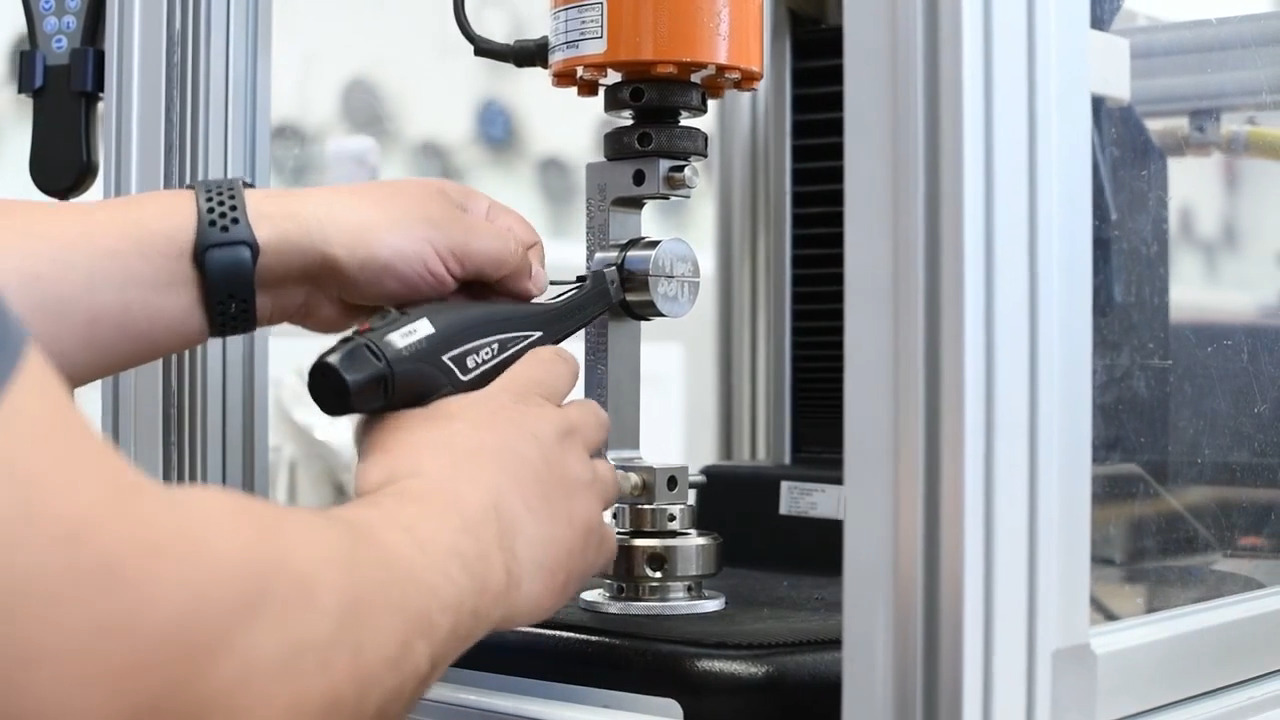
The EVO Cut is part of a broader family of HellermannTyton hand tools that share the EVO name and design. On the installation side, EVO 7i and similar tensioning tools (Figure 2) are engineered for repetitive application of cable ties, combining durable construction with ergonomic shaping to reduce operator fatigue during long runs of harness assembly. Using the tensioning tool to install ties and the EVO Cut to remove them gives you a matched pair of purpose-built tools for the complete cable tie lifecycle, from the first bundle on a new build through every service visit that follows.
 Figure 2: HellermannTyton released updated versions of its handheld cable tie application tools, the EVO 7 and 9. The new models, called the EVO 7i and 9i, offer visual and functional enhancements in line with the company’s ongoing strategy to build the best industrial tools for customers that process wire, cable, and tubular bundles. (Image source: HellermannTyton)
That pairing is worth considering whenever you are standardizing tooling for a production line, a service fleet, or training program. Technicians who learn on purpose-built tools tend to develop safer habits than those who improvise with general-purpose alternatives, and the quality of the finished work reflects that from the beginning.
A small tool with outsized value
It is easy to overlook a tool whose only job is to cut something that was already designed to be cut. But cable ties are almost always installed on cables that matter, whether they carry power, signals, or data that a whole system depends on. A tool that protects those cables every time you reach for it is worth having on the bench, in the service kit, and toolboxes of professionals who work with wiring for a living. The EVO Cut delivers value in a package that is light, simple, and ready to use from the moment you pick it up.
To see full specifications, purchase the EVO Cut, or explore HellermannTyton’s complete EVO tooling family, please visit the EVO Cut product highlight page.
Disclaimer: The opinions, beliefs, and viewpoints expressed by the various authors and/or forum participants on this website do not necessarily reflect the opinions, beliefs, and viewpoints of DigiKey or official policies of DigiKey.