Settings
 Fast Delivery
 Payment Types


 Marketplace Product

Enabling Autonomous Mobility in Robots
2026-10-01
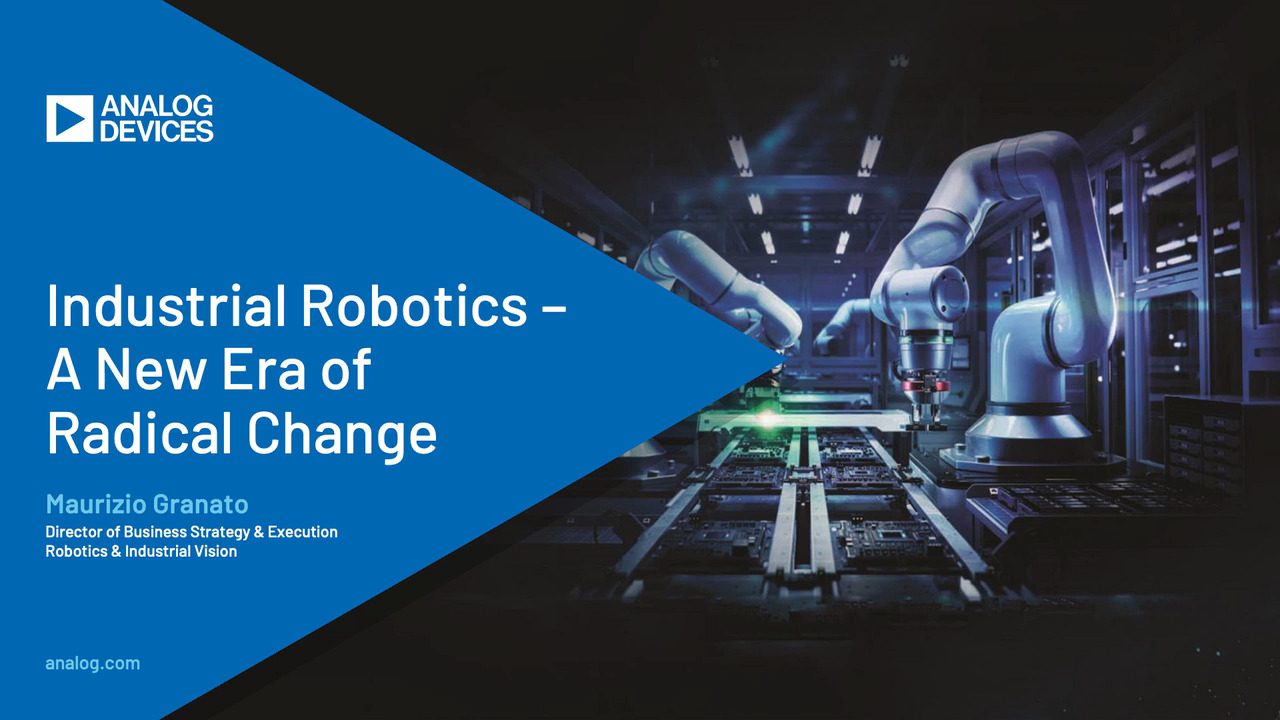
Industrial robotics is in the midst of its fourth wave of innovation and transformation – reshaping how goods are produced, moved, and managed. The first wave brought stationary, fixed-mounted robots focused on precision and repeatability. The second introduced mobility: first programmed, then increasingly autonomous. The third combined multi-axis robots with autonomous moving robots, creating mobile manipulators. Currently, the fourth, still emerging, brings fully autonomous robots with human-like features and capabilities. Each wave marks a fundamental leap – expanding what machines can do and signaling how deeply robotics will shape our world.
The era of fixed automation
 Figure 1: Industrial robotics is in the midst of its fourth wave of innovation and transformation (Image Source: Analog Devices Inc.)
Introduced in the mid-20th century, mounted robotic arms transformed production lines by automating repetitive and high-precision tasks like welding and assembly. Guided by programmable logic controllers (PLCs) and often isolated behind safety cages, they excelled in speed, consistency, and efficiency. Although rigid and limited to preprogrammed motions, and despite being blind to the world (outside of their narrow focus), they laid the foundation for today’s automation economy.
Breaking free: the shift to mobility
The second wave of robotics introduced mobility with self-driving robots. In the 1970s through 1980s, guided vehicles (GVs) followed fixed paths marked by tapes, wires, or strips – limiting flexibility. Modifications resulted in additional costs and rigid routes, which made GVs prone to disruptions and restricted their scalability. Automated guided vehicles (AGVs) were the next step – they dropped the rails/tape and began to use sensors. AGVs still followed predefined routes, but with more flexibility and programmability.
 Figure 2: Automated guided vehicles (AGVs) dropped the rails/tape and began to use sensors (Image Source: Analog Devices Inc.)
The ascent of autonomous mobility
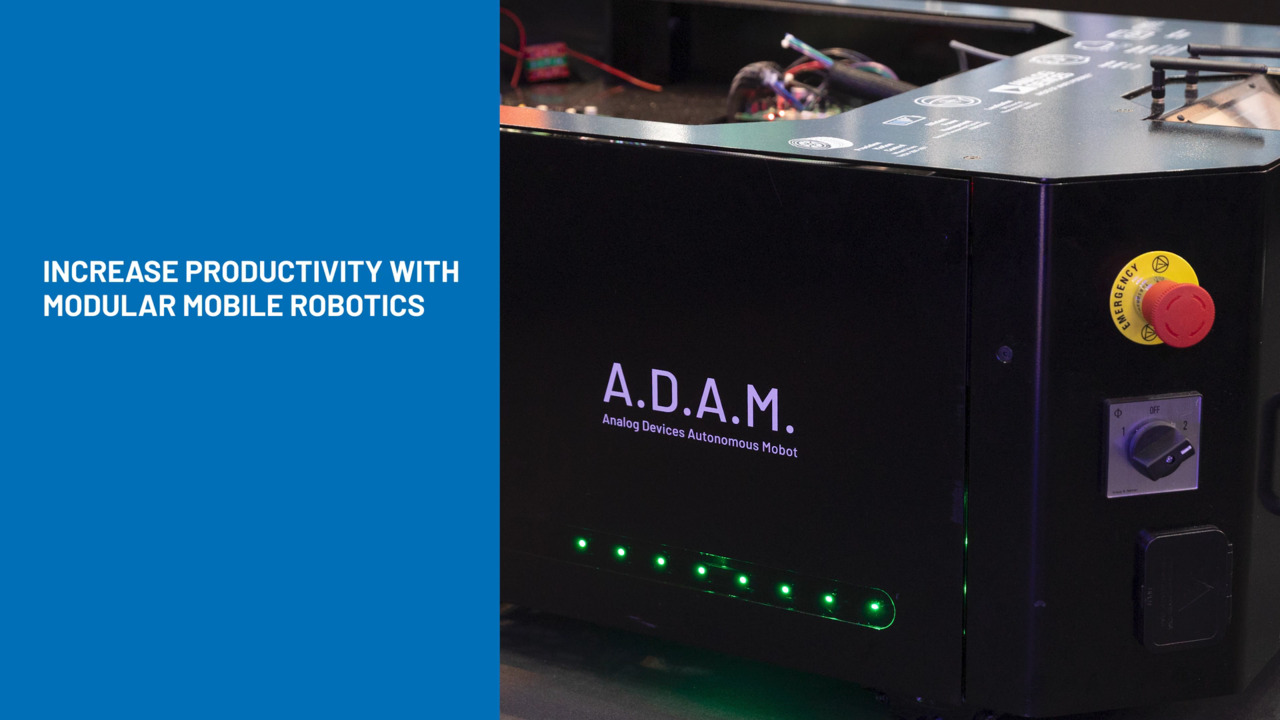
Autonomous mobile robots (AMRs) gave rise to a new chapter in the evolution of industrial automation, bridging the gap between static efficiency and dynamic adaptability to execute tasks without human intervention.
Enabled by advances in sensor technologies, AI, and computing, AMRs abandoned fixed tracks in favor of real-time perception and adaptive navigation. In contrast to AGVs, AMRs have lower installation costs and provide greater flexibility. Leveraging technologies like reliable, low-latency Ethernet/GMSL connectivity, Depth Sensing/LIDAR (light detection and ranging), and SLAM (simultaneous localization and mapping), these robots can navigate complex and dynamic environments. Today, Analog Devices, Inc. (ADI) is working with Teradyne Robotics, a world leader in automation systems, to advance autonomous operations.
Autonomous robots don’t just move – they think!
Unlike AGVs, AMRs are context-aware. They employ increased sensorization and more advanced processing, becoming more adaptable and human-like. This ability enables them to detect obstacles, reroute dynamically, and prioritize tasks based on operational needs, thereby enhancing their efficiency, versatility, performance, and reliability.
AMRs are transforming industries. They streamline warehouse operations such as restocking and order fulfillment without manual oversight, enable just-in-time production on factory floors, and safely transport supplies in hospitals while assisting with infectious patient care. In high-risk environments like chemical spills or wildfires, they go where humans can’t, gathering data and maintaining continuity.
AMRs excel in dynamic environments where traditional automation falls short. They’re game changers in brownfield sites and operations that require frequent reconfiguration. Their ability to safely share spaces alongside humans opens new possibilities across industries, from logistics and fulfillment centers to research labs.
|
Automation and robot market trends 1 million mobile robots to ship in 20301 The installed base of mobile robots is projected to surpass 4.2 million by the end of 2030, with nearly 1 million to be added in 2030 alone (excluding Amazon).1 Labor shortage remains the most significant driver of demand for mobile robots.1 A recent McKinsey survey of 65 top logistics and supply chain executives revealed that 70% plan to invest approximately $100 million in automation over the next five years, prioritizing speed, process stability, and reduced labor dependency.2 Only 20% of warehouses in N. America have adopted any form of automation.3 80% of the warehouse automation market in N. America is still available with a projected automation compounded annual growth rate of 8.3% over the next few years.3 |
The challenges
Despite the breakthroughs in the autonomous operation of mobile robots, significant hurdles remained. High-mix environments demanded advanced perception and reasoning, along with reliable sensors, AI, and data processing, while limitations in battery life, payload capacity, and interoperability hindered widespread deployment. Overcoming these challenges calls for bold new innovation and enhanced development in these fields.
- Motion: BLDC (brushless direct current) motor motion control, advanced navigation and localization hardware, software, and AI enable robots to maintain position and navigate through complex environments, with angle sensors (encoders) and inertial measurement units (IMUs) accurately measuring acceleration, orientation, and angular velocity.
- Perception: Time-of-flight (ToF) cameras built for precise depth sensing, and audio sensors designed for detecting human voice, presence, and activity, enhance human-robot interaction and coordination.
- Power: Effective power and battery management are essential for continuous operation, minimal downtime, and reliable performance. Real-time energy monitoring ensures robots have sufficient power to complete tasks and return to a charging station. Management of energy flows between the mobile base and the arms mounted on them.
ADI collaborates with robot manufacturers and industrial end-users to address the operational challenges of autonomous mobile robots. Direct engagement with end-users provides ADI with vital insights into current obstacles and emerging requirements, accelerating deployment, improving scalability, and reducing time-to-market for customers.
|
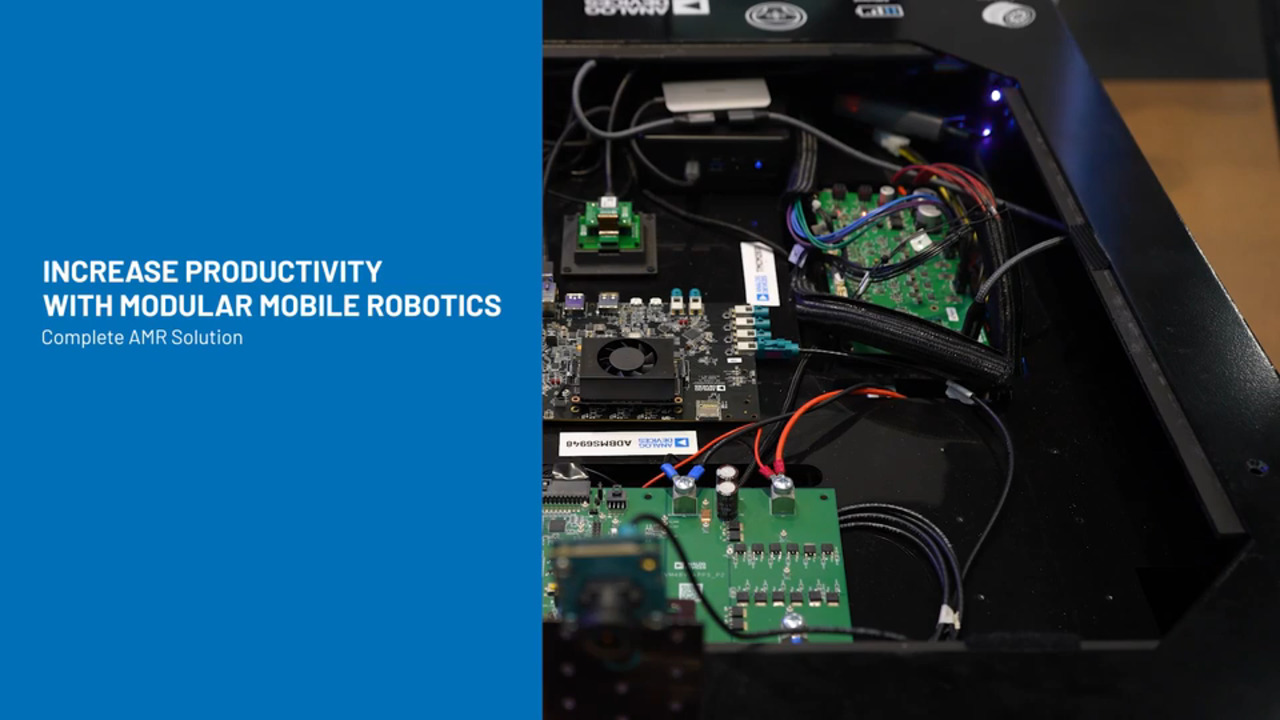
ADI: accelerating AMR time-to-market & scalability with complete end-to-end solutions Robotic market leaders rely on ADI’s core technologies to enable high-volume manufacturing, efficiently scale production, and shorten time to market. ADI provides comprehensive end-to-end solutions and subsystems – not just standalone components – drawing on our expertise in hardware, software, and AI to deliver measurable improvements across key areas.
|
Mobile manipulators
Mobile manipulators (MoMas), the third wave of innovation, combine articulated robotic arms with autonomous mobile robots (AMRs), transforming mobile platforms from simple transport into adaptive, interactive automation. With six degrees of freedom, MoMas can precisely position and orient tools in three-dimensional space, enabling reliable manipulation of parts with varying locations, heights, and orientations. This flexibility reduces dependence on fixed tooling and tight tolerances, accelerates deployment, and enables scalable automation across changing layouts and product mixes – unlocking workflows that were previously impractical or uneconomical to automate.
 Figure 3: Mobile manipulator working alongside human operators in Analog Devices Beaverton, Oregon chip fabrication facility. (Image source: Analog Devices Inc.)
Humanoid robots: they’re here
We are now entering the fourth wave: autonomous humanoid robots. These bipedal, wheeled, or multi-limbed machines operate in human environments, performing tasks that require dexterity and decision-making, marking a shift from specialized automation to general-purpose labor.
 Figure 4: We are now entering the fourth wave: autonomous humanoid robots (Analog Devices Inc.)
ADI collaborates with leading humanoid robot developers worldwide, providing advanced perceptual capabilities and developing embodied physical AI to enable humanoid robots to interact seamlessly with their human counterparts in automotive, industrial, and healthcare sectors. ADI’s zero-power, multi-turn ADMT4000 technology is a key enabler for next-generation humanoids, tracking multiple rotations without any electrical power. It’s ideally suited for humanoid robot actuators, eliminating the need for re-homing on power-on, following a power interrupt or battery swap.
The future is mobile and autonomous
The trajectory is clear: autonomy is now the norm, not the exception. AMRs have evolved from niche products to core components driving smart operations. With over 100,000 units sold each year, they are the fastest-growing segment of the industry. As we look to a future with more advanced humanoid robots, mobility and autonomy are not just the foundation of efficient industrial operations; they are the cornerstone of what comes next.
Explore Analog Devices’ end-to-end solutions for robotics on the DigiKey website.
References:
1 Ash Sharma. “Mobile Robot Forecast Downgraded as Macro-Economic Factors Continue to Bite.” Interact Analysis, December 2024.
2 McKinsey Global Industrial Robotics Survey, 65 senior leaders and executives in automotive; food and beverage; life sciences, healthcare, and pharmaceuticals; logistics and fulfillment; and retail and consumer goods sectors, August 2022.
3 Alberto Oca, Chetan Sampat, Manju Thirtha. “Navigating Warehouse Automation Strategy for the Distributor Market.” McKinsey & Company, Sept. 2024.
Disclaimer: The opinions, beliefs, and viewpoints expressed by the various authors and/or forum participants on this website do not necessarily reflect the opinions, beliefs, and viewpoints of DigiKey or official policies of DigiKey.