Settings
 Fast Delivery
 Payment Types


 Marketplace Product

How to Apply an AI Agent to Accelerate Test Generation
Contributed By DigiKey's North American Editors
2026-10-06
Technical Overview: As electronic products grow more complex, test engineers must develop reliable test systems within shorter schedules while managing larger volumes of measurement data. Integrated instruments and software can simplify setup, improve repeatability, and make results available for analysis. NI’s LabVIEW+ Suite brings together tools for instrument configuration, graphical programming, test sequencing, and data analysis. Its Nigel AI advisor assists engineers with tasks such as generating measurement code and creating test sequences from specifications, subject to engineering review. This article examines the pressures driving test automation, explains the roles of InstrumentStudio, LabVIEW, TestStand, and DIAdem, and describes how Nigel AI supports development. (Overview courtesy of ChatGPT)
Electronic products are becoming increasingly complex, with multiple functions, large data files, and more complex interfaces. As their capabilities grow, testing these features becomes more challenging. Because production testing occurs at the end of the design cycle, test development must accelerate. Test engineers need better tools to quickly build evaluation systems that meet the complex testing requirements of today's new products.
Artificial intelligence (AI) offers test engineers a tool for faster test system development. With test engineer supervision, AI can write code, create test sequences, analyze data, and generate test reports.
This article discusses the challenges test engineers face and why a new methodology is needed. It then introduces an AI agent from NI optimized for test system development and shows how it can improve the efficiency and effectiveness of software testing.
The need for a new test methodology
Shorter test development schedules for increasingly complex products are driving test designers to explore new methodologies. First, greater product complexity requires many more tests to fully characterize product functionality. Manual or semi-automated test code generation would take too long to achieve the required level of testing within the shorter development time allowed. A fresh approach is needed to achieve greater test coverage in less time.
The second issue driving the need for improved test practices is reducing non-repeatable test results caused by setup errors, rather than by changes in the device under test (DUT). Complex tests require multiple measurement instruments. Piecemeal instrument control can create setup gaps that produce erroneous results. Integrated software automation can record complete instrument setups and switch between them with a simple command.
Test data, in addition to product test results, offers a wealth of information. Mining test data reveals new product performance trends. However, test data is worthless if it is locked in the system and unavailable to product and test designers.
Software system architectures that use modular or stand-alone instruments provide immediate access to test results while streaming large, context-sensitive data sets to central data storage for analysis by other people and AI-based programs (Figure 1).
 Figure 1: Test systems with highly integrated hardware and software provide immediate access to test results. (Image source: NI)
New software technology is making software automation available to more engineers
Software automation has historically been a major barrier to writing the custom code required for each unique test measurement. It requires specialized programs that are not application-specific to test systems. This is changing as more complete application-specific software provides configuration-based workflows for complex measurements.
NI has delivered improved test and measurement solutions using their platform-based technologies and services. These solutions employ a full range of test products, including high-performance modular instruments, open software, and AI-based capabilities. Together, these elements create a unified, software-centric solution that delivers more productive testing programs. NI test solutions improve productivity across research, validation, and production. The NI platforms empower these teams to solve complex challenges with speed and precision.
Before diving into AI-augmented programming, note that NI has invested millions of hours in its test software tools. Consider InstrumentStudio, which is used to configure and visualize measurements from NI PXI hardware. Test engineers can take measurements from compatible hardware using InstrumentStudio without writing code. The application detects connected instruments in the test system and creates a multi-instrument user interface that displays them simultaneously (Figure 2).
 Figure 2: Shown is an example of an InstrumentStudio workspace with a scope and waveform generator. (Image source: NI)
The instrument drivers in this software are intelligent in their own right. For instance, if two PXIe-5108 four-channel oscilloscopes are detected in the PXI chassis, InstrumentStudio treats them as a single eight-channel oscilloscope. This happens without any user interaction, demonstrating the high level of software and hardware integration. Even software this powerful can be enhanced with AI agents.
A test engineer's responsibilities span more than any single development environment can support. Today, LabVIEW+ Suite provides tools for planning, simulation, initialization, development, debugging, and data visualization. It includes LabVIEW, TestStand, DIAdem, InstrumentStudio, and FlexLogger. Test professionals need these dedicated tools to operate at higher conceptual levels across a broader range of challenges. The current versions of these programs include the AI advisor Nigel AI (Figure 3).
 Figure 3: Shown are the software elements included with LabVIEW+ Suite, including Nigel AI. (Image source: NI)
LabVIEW+ Suite includes tools that reduce development time and increase coverage. With these tools, test engineers can configure, visualize, and automate measurements. They can also analyze test data and generate and distribute reports more quickly.
At the core of this software bundle is LabVIEW, a graphical programming environment that enables engineers to create test programs by connecting graphical blocks that represent test system elements. LabVIEW simplifies instrument control, data acquisition, and analysis.
Testing applications are distinct from program development in other application areas. They stream large volumes of mixed-signal data from the real world; they require tools that make behavior patterns visible, showing how processes interact, how data flows, and how code is implemented, making test systems easier to understand and validate. Graphical coding simplifies development because it clearly presents the operational flow of the test programs. This is similar to how circuit design is approached. While circuits can be represented as a netlist, which fully describes component connections, engineers use schematics because they show component relationships and interdependence. LabVIEW fulfills this need in test programming.
TestStand is a test management software package that helps create, debug, and implement validation or production test systems. It serves as an easy-to-use test sequencer, eliminating the need to develop in-house sequencer programs. TestStand lets designers build a test sequence by entering a test specification; it organizes code modules from various programming languages and runs them in the desired order to satisfy the test specification. It can improve throughput with parallel testing. TestStand then monitors execution to identify bottlenecks and packages sequences for deployment to manufacturing test stations.
DIAdem is a powerful evaluation tool for managing, analyzing, and reporting measurement data. Its advanced analysis engines help process long data records, extract trends, and enable users to visualize their data. DIAdem can handle over a thousand file formats and streamline the workflow from data acquisition to presentation by facilitating the creation of comprehensive reports.
AI in test engineering
AI is playing an increasingly important role in driving test engineers' productivity. Comprehensive test system design, including activities such as test plan generation, asset management, process optimization, data management, and root cause analysis, are among the key tasks that can benefit from AI.
Effective use of AI tools requires access to the entire test generation system, including the full range of hardware and advanced software, a strong understanding of test methodology and best practices, and checks that “keep an engineer in the loop” (Figure 4).
 Figure 4: Using AI requires access to all elements of the test system, both hardware and software. (Image source: NI)
NI’s Nigel AI agent is optimized for testing. It is embedded in LabVIEW, TestStand, and InstrumentStudio, and is intended to increase engineering efficiency through intelligent automation while preserving the test engineer's control over every engineering decision.
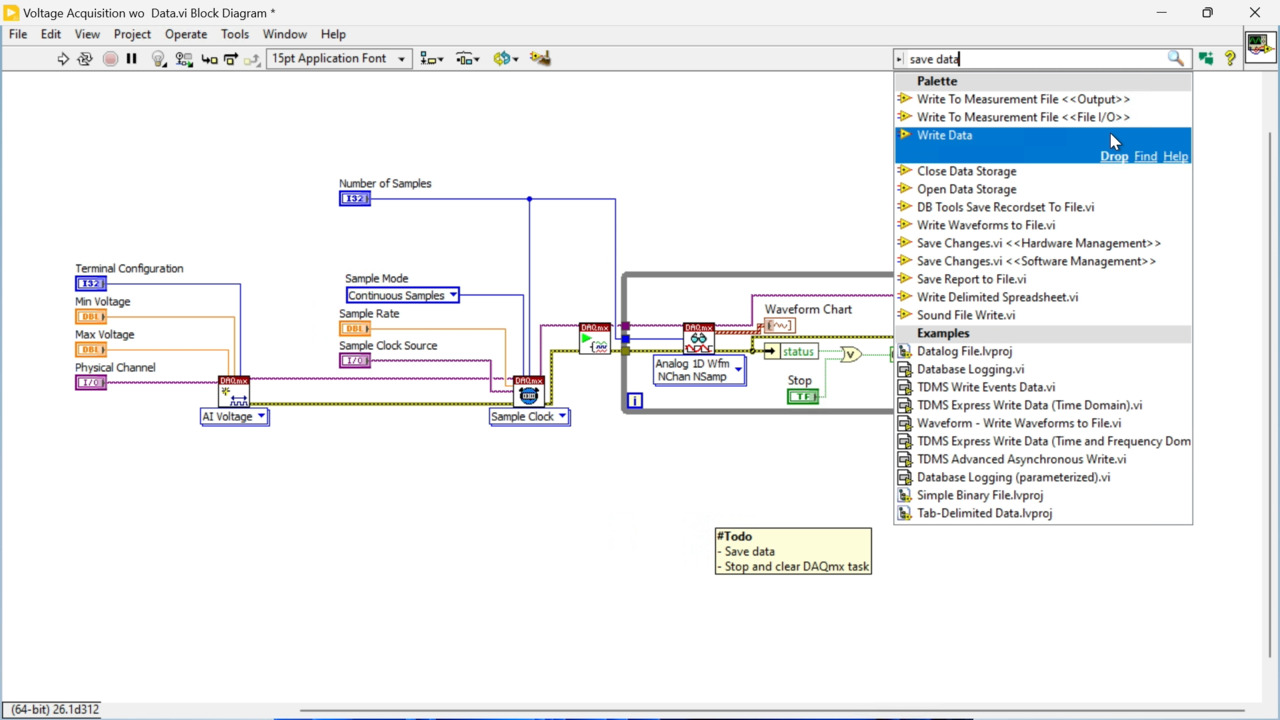
Nigel AI is fully integrated into NI applications, helping users learn any LabVIEW+ Suite component software program and answer questions about it. It can also help generate code. For example, when building a test program in LabVIEW, the engineer describes the required test in natural language. Based on its training in test engineering and NI’s historical records, Nigel AI searches for related reference applications and programs and suggests example code that aligns with the capabilities of the attached instruments. The engineer can review the suggested code and edit it to meet their needs.
Within TestStand, Nigel AI helps create, enhance, and validate automated test sequences using test programs written in LabVIEW, Python, C/C++, .NET, and other supported languages. Users can ask Nigel AI questions about TestStand operations and access documentation instantly. TestStand can interpret user-entered specifications and implement appropriate tests using available virtual instruments and programs, and can speed execution by running operations in parallel. TestStand can also monitor execution for bottlenecks in test sequences and help correct them, while tracking results and automatically generating reports. These reports can be saved to local or network databases in formats such as HTML, XML, ATML, and ASCII (text).
Nigel AI can automatically generate source code, a process called vibe coding, for test elements that do not involve complex logic, freeing designers to focus on those complexities and other higher-order test issues.
Conclusion
The move to AI in test system development, using a tool like NI Nigel AI, greatly increases test designer productivity. Nigel AI complements and extends the capabilities of NI’s LabVIEW, TestStand, DIAdem, and InstrumentStudio, freeing test engineers from mundane code and sequence generation so they can focus on more critical testing issues.

Disclaimer: The opinions, beliefs, and viewpoints expressed by the various authors and/or forum participants on this website do not necessarily reflect the opinions, beliefs, and viewpoints of DigiKey or official policies of DigiKey.