Settings
 Fast Delivery
 Payment Types


 Marketplace Product
Explore how Microchip, Bourns, and Amphenol address timing sensitivity in embedded systems, ensuring precise synchronization and performance across critical applications.

Microchip and DigiKey help provide reliable timing solutions for embedded systems.

Discover Microchip's advanced timing solutions for test and measurement applications, featuring low-jitter clocks, signal integrity, skew management, and precise synchronization for high-performance system designs.

Discover Microchip automotive PCIe timing solutions for ADAS, featuring multi-output MEMS clock generators that reduce board space and system complexity.

Microchip’s Expert Sieg Schmalz describes some of the other parameters that engineers use to determine whether a clock is a good fit for a given application. These parameters include rise and fall time, slew rate, duty cycle, propagation delay, skew.
Microchip’s expert Sieg Schmalz provides a definition of Clock Phase as it pertains to timing applications and provides some examples of describing phase.

Microchip’s Expert Sieg Schmalz shares how our relationships with clocks change when looking at them through the lens of timing applications.
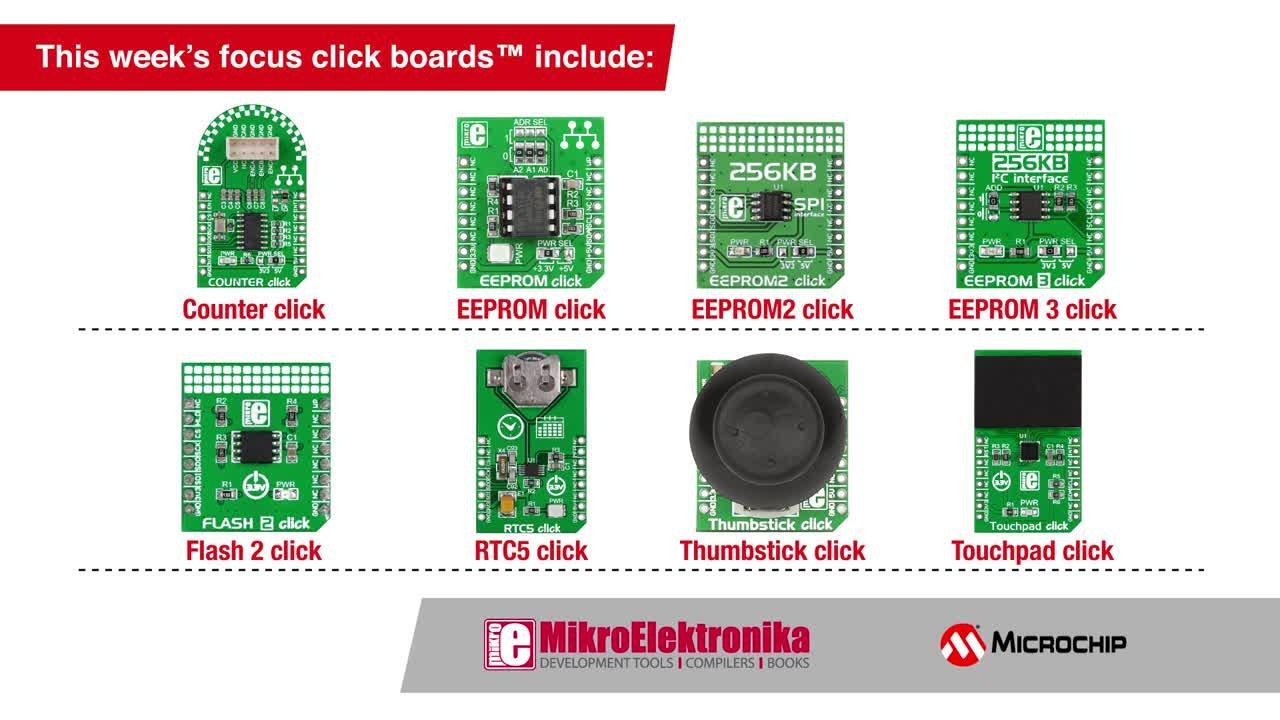
We’re rolling into Week 3 of the Click into MCC, 50 Clicks in 50 Days promotion. This week, we’re focusing on Human Machine Interface and Storage solutions, with a little bit of Timing & Counting thrown in for good measure.

Microchip’s Expert Sieg Schmalz contrasts stability vs. average value and stability vs. accuracy. He also explains how these parameters are described in a typical Timing Source data-sheet.
Timing specifications typically include parameters such as "Phase Noise" and "Jitter", which are related to a clock's Phase Domain Spectral Power Density.
Engineers are typically accustomed to thinking in the Voltage Domain, but to understand Timing, one needs to understand how to think in the Phase Domain.

Learn about the DSA1500 family of automotive-grade CMOS MEMS oscillators, featuring low power consumption, low jitter performance, ±20 ppm frequency stability, and AEC-Q100 compliance.
Phase Power Spectral Density -- more commonly called “Phase Noise” in Timing applications – is explained in this video and compared to FM radio modulation.

Micrel's Vince Stueve discusses Micrel's new low jitter frequency synthesizers.

Microchip’s DSC6000 family of MEMS oscillators now available with ultra-low power and ultra-small package.

Microchip's DSC6000 series of MEMS oscillators offer ultra-low-power in an ultra-small package.

Microchip’s expert Sieg Schmalz explores Frequency Stability, how to quantify it, and provides some examples to illustrate the concept.

Microchip’s Expert Sieg Schmalz defines an ideal clock and begins to explore what makes a clock "good enough" for a given application.
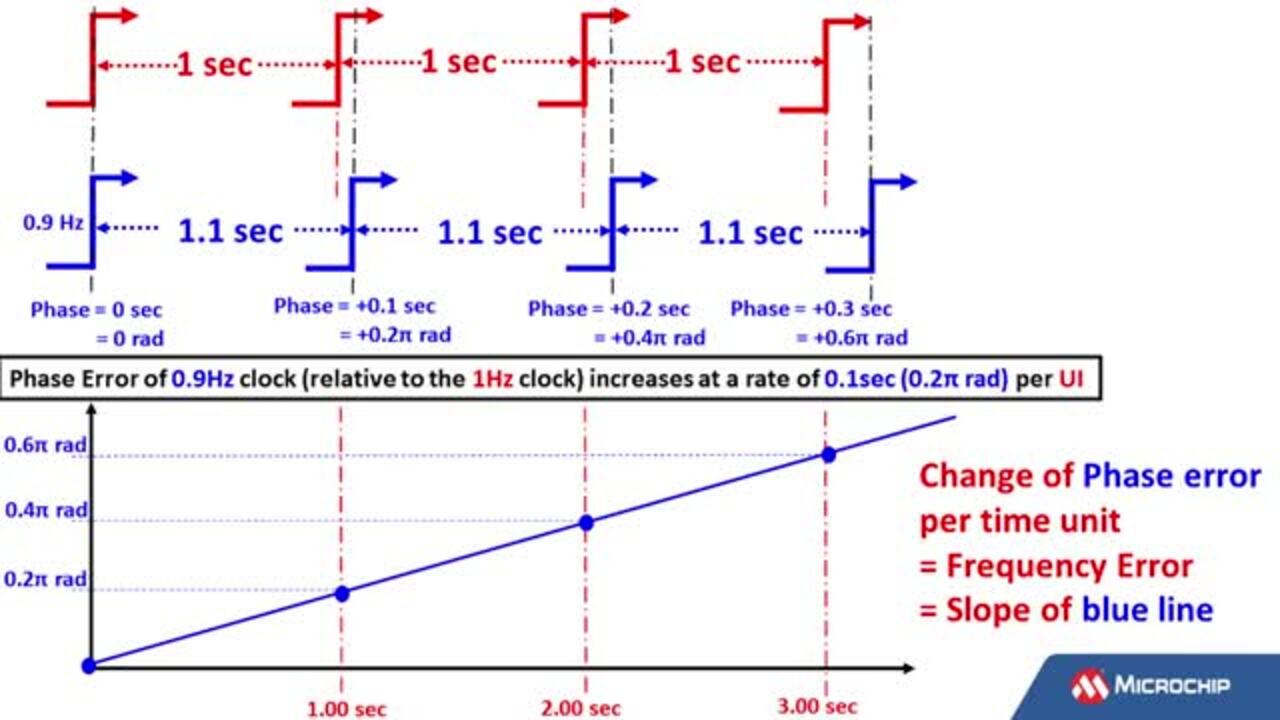
Microchip’s expert Sieg Schmalz discusses the relationship between Frequency and Phase, as well as how to quantify Phase Error and Frequency Error.
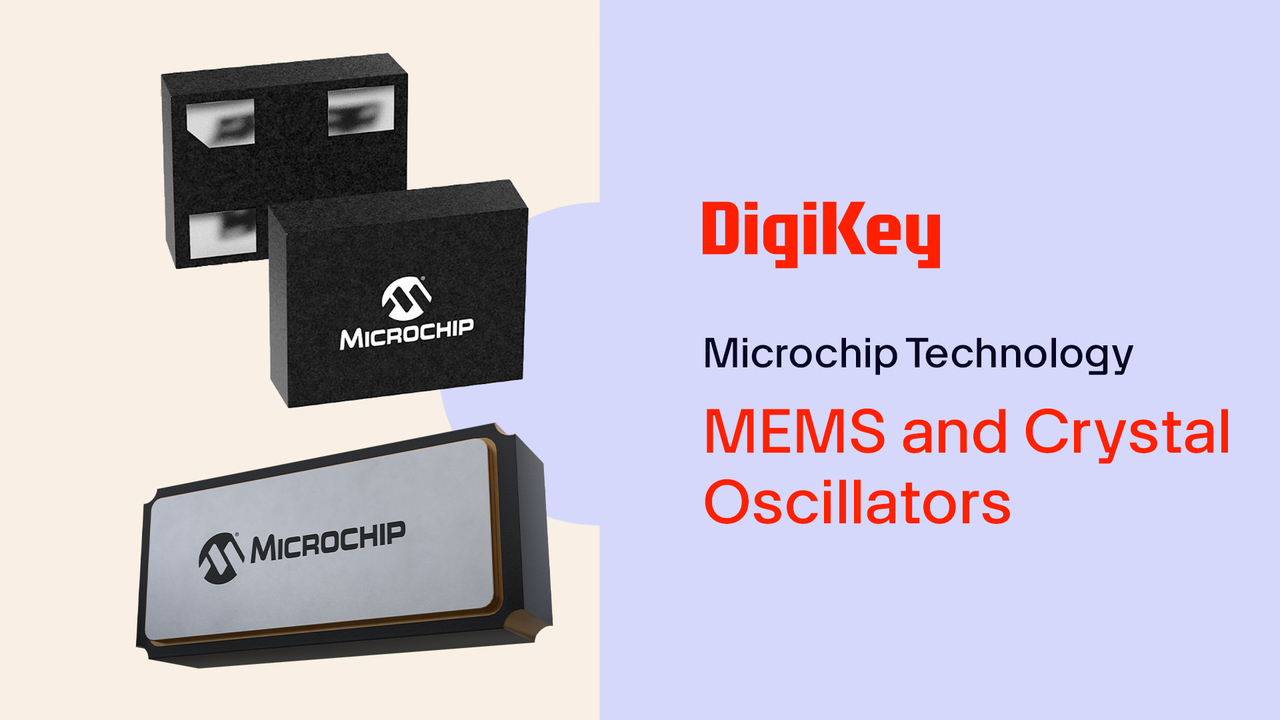
This video discusses Microchip Technology's wide portfolio of MEMs and crystal oscillator solutions.